Why a Curved Path Changes the View
A curved garden path can reveal plants and focal points in stages. Shape its route around useful destinations and shifting views for a walk that feels clear.
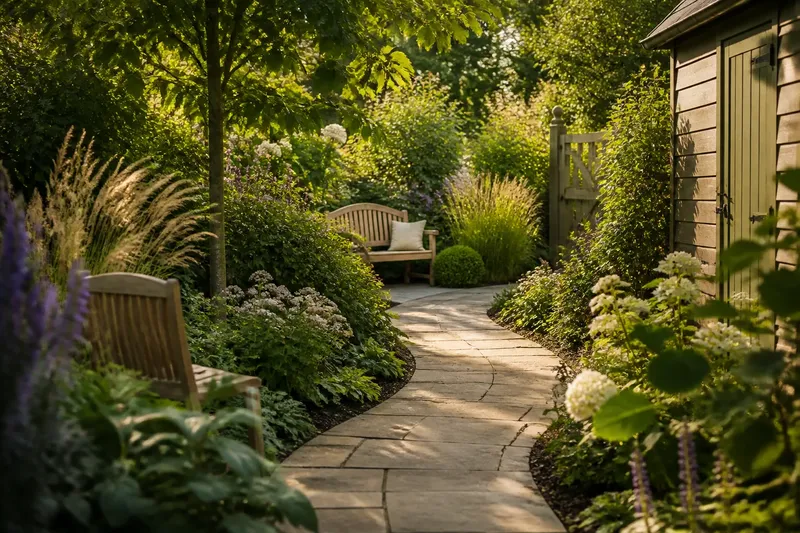
You step off a straight patio path and see the whole border at once: the bench, the tall grasses, the gate. A gently curved route hides some of that scene until you move. That is the pleasure of a curved garden path: its direction edits the view, letting one part of the garden arrive before another.
But a bend alone does not make a walk engaging. If a curve blocks a useful destination, feels awkward underfoot or reveals nothing new, it can seem like decoration in the way. The useful question is not how curvy the path should be, but what each change of direction helps a walker notice.
Why does a curved garden path need a purpose?
A path can wind without creating any sense of discovery. This usually happens when its turns do not relate to anything beyond the paving: the route bends, but the view remains nearly identical, or the garden’s focal point is visible from the entrance and stays visible throughout.
Look along the route from the starting point, then from each bend. Notice what enters, leaves or shifts in the frame. A tree trunk might screen a sitting area; a low mound might conceal the far end of a border. If nothing changes, the path may need a clearer visual purpose—or a simpler line.
Try placing a temporary object where you want the view to open: a chair, a potted plant or a cardboard panel held upright. Walk the proposed route and see whether the object appears at a meaningful moment. This does not need to become a permanent feature; it helps distinguish an intentional reveal from an arbitrary wiggle.
Does the bend hide the destination for too long?
Partial concealment can invite a walker onward, but hiding every destination can make a small garden feel confusing. The cause is often a curve that screens both the next section of path and any clue about where it leads. A visitor then sees a barrier rather than a reason to continue.
Keep a hint in view. It might be the upper part of a gate, the canopy of a small tree, a bright patch of paving or the corner of a bench. The destination does not have to be fully exposed; a glimpse gives the route a direction while preserving the later reveal.
Imagine an invented narrow side garden where a straight view ends at a shed door. The starting point is a proposed curved route and a seating nook hidden behind shrubs. You place a chair so its back is just visible from the entrance, then walk the route from that entrance and from the shed. If the chair offers a clear clue without exposing the whole nook, the route signals where it leads while keeping the later view; if the shrubs hide both chair and path, shift the curve or thin the screen until one clue returns.
Why does the path feel like a detour?
When a curve adds distance without adding interest, the usual problem is a mismatch between route and task. A person carrying a watering can, reaching the compost area or heading to the back gate may need a direct connection more than a sequence of views. A leisurely route should not make routine movement inconvenient.
Separate the main desire line from the scenic walk where the site allows it. A direct, comfortable route can lead to a frequently used door or work area, while a curved path branches toward a bench, specimen tree or quieter corner. In a compact garden, one route may need to do both jobs; in that case, favor easy movement and let planting create the changing views.
Check the route with the things that actually travel through the garden: a wheelbarrow, a hose or a loaded basket. If a bend forces an awkward turn, consider easing that portion rather than adding a sharp shortcut across a bed. Surface, width, drainage and access needs depend on the site and materials; follow manufacturer directions and relevant local requirements where applicable.
Why does the curve reveal the wrong subject?
A turn directs attention, whether you intend it or not. If the inside of a bend opens onto a utility bin while the border’s best feature sits behind the walker, the path is still shaping the view—it is simply emphasizing the wrong subject. This can happen when the route is planned from above, as a pleasing shape on paper, instead of from a person’s eye level.
Walk the line in both directions. A view that works on the way out may feel flat on the return, when the same plant appears against a different background. Notice where a strong vertical form, a doorway or an exposed wall lands in the frame. You may be able to change what stands beside the path, or shift the curve so a less useful view is screened and a more inviting one is uncovered.
Plant height matters here, but the point is not to hide everything. A loose screen of foliage can soften a service area while allowing light and air through; low planting near a bend can keep the path’s edge legible. Avoid filling every opening just because a view feels unfinished. A clear glimpse of the broader garden can provide a welcome pause between more enclosed moments.
How can you tell whether a curve is comfortable?
A route that looks graceful on a plan may feel cramped at walking pace. Tight turns, uneven edges or a narrow passage beside dense planting can make people slow down for reasons that have nothing to do with enjoying the view. Before committing to a layout, trace it on the ground with a garden hose or a line of sand, then walk it at an ordinary pace.
Pay attention to where your feet naturally want to go. Does the path invite a smooth turn, or do you cut across the inside of the bend? Does a shrub brush your shoulder? Can two people pass where they need to? These observations help you decide whether to soften a curve, open a pinch point or let a planting bed define the turn instead of hard paving.
It is not worth adding a series of small bends simply to make a short path look elaborate. One clear change of direction, paired with a view that genuinely shifts, can do more than a string of decorative kinks.
What should you check before settling on a curved garden path?
Use this route checklist on the ground, not just on a sketch. For each item, note what you observe and choose the adjustment that follows from it.
- Mark the route’s start and destination with stakes or garden hose. If the line connects the places people use and reaches the intended destination, keep it; if it misses a regular doorway or work area, redraw the connection before shaping the curve.
- Stand at the entrance and look toward the first bend. If a new feature or view appears there, keep the bend; if the scene stays unchanged, shift the curve or nearby planting to give it a visible purpose.
- At the bend, check whether you can see a clue to the next section, such as a gate edge, a paving change or a recognizable plant. If one is visible, preserve that sightline; if none is visible, expose a small clue or soften the screening.
- Walk the proposed route with a watering can or loaded basket. If you can turn without awkward steps or brushing planting, keep the line; if the bend interrupts the task, ease it or make the everyday route more direct.
- Walk back toward the entrance and check what frames the view. If the return journey offers a useful composition, retain the layout; if a bin, bare wall or confusing junction dominates, adjust the curve or screen that view selectively.
- Look at the path edge beside each bend. If its boundary is clear underfoot, keep the edge; if planting or uneven ground obscures it, open the passage or define the edge with a suitable surface treatment.
Where should the route begin and end?
Mark the doors, gates and places people use regularly before drawing the curve. Keep the route if those connections remain understandable; if a bend makes a useful destination awkward to reach, revise the line or provide a more direct connection.
What becomes visible at the first bend?
Stand at the entrance and identify the first new thing the turn reveals. Keep the curve if the view changes meaningfully; if not, adjust the route or nearby planting so the bend has a clear reason.
Can you still read where the path goes?
Look for a clue to the next section or destination, such as a visible gate edge, paving shift or recognizable plant. Preserve it if it guides the eye; if the route appears to end at a barrier, reveal a clue without opening the entire scene.
Does the return journey offer a different view?
Walk the route back and check what frames the garden from that direction. Keep the arrangement if the return view feels clear and inviting; if an awkward sightline takes over, shift the curve or selectively screen the distraction.
A curved garden path works best when its route, pace and sightlines cooperate: it gives a walker enough direction to feel at ease and enough change to keep looking. Before building, lay out the line with a hose, walk it from both ends and apply the checklist to the views and turns you actually encounter. That walk can show whether the curve reveals the garden—or merely takes the long way around.