Compost, Mulch and Leaf Mould: Different Materials, Different Roles
Choose compost, mulch, or leaf mould by the job at hand: improve a bed, cover soil, or add gentle organic matter without confusing their roles.
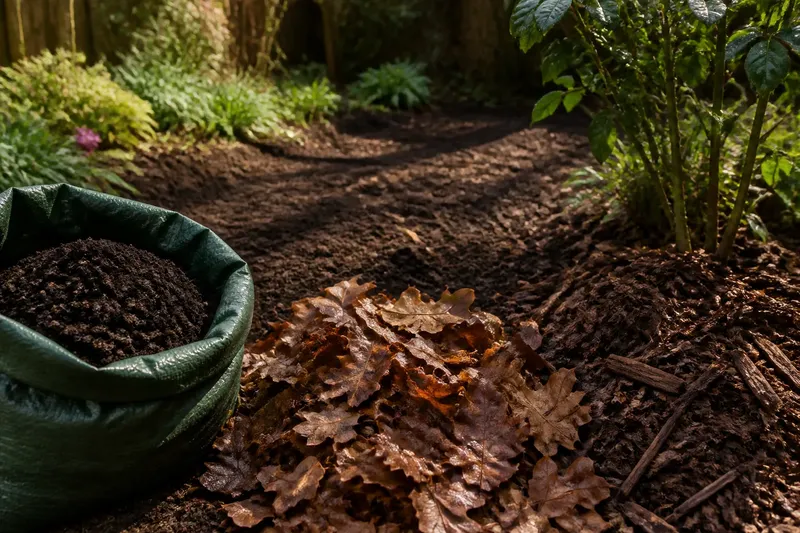
You’re holding a bag of compost beside a bare flower bed, while a heap of fallen leaves waits under the hedge. Compost, mulch, and leaf mould all come from organic matter, but they answer different garden needs. Choosing by the job—not just the product name—helps you put each material where it can do the most good.
What job does the soil need done?
Start with the condition you can see. Is the bed short on organic matter, exposed to drying wind, or already healthy but in need of a light seasonal cover? Those are different requests, and the materials are not interchangeable simply because they look brown and crumbly.
- Compost is decomposed organic material used to enrich soil and support its structure.
- Mulch describes a protective layer spread over the soil surface. It may be compost, leaf mould, bark, wood chips, or another material.
- Leaf mould is made chiefly from decomposed leaves. Gardeners use it as a gentle soil conditioner or surface cover, depending on its texture and maturity.
The distinction between a material and a role matters: compost can be used as mulch, but not every mulch is compost. Leaf mould may serve as a mulch, yet its leaf-based character gives it different qualities from a finished compost blend.
Does the bed need enrichment or a cover?
Choose compost when the main aim is to add organic matter through the cultivated layer. It is a common choice for preparing planting beds or refreshing tired soil before new plants go in. Work it into the upper soil where appropriate, or follow the product directions if it is a purchased blend. For established plants, a surface application may be less disruptive than digging around their roots.
Choose a mulch when the soil surface needs protection. A covering can soften the impact of rain, reduce direct exposure to sun and wind, and make a bed look more composed. Organic mulches also break down over time, though the pace and resulting soil contribution depend on the material.
Mulch is not automatically a soil amendment. A coarse bark layer, for instance, mainly covers the surface; it does not act like a ready-to-mix compost simply because it will eventually decay. Keep surface materials on top rather than treating every mulch as something to dig in.
Would leaf mould suit a quiet, leafy bed?
Leaf mould is a good fit when you want a soft, leaf-derived material for woodland-style planting, shade borders, or beds where a gentle surface layer suits the look. Well-decomposed leaf mould is often crumbly; less-decomposed leaves can remain fibrous and are better thought of as a slower-decaying cover.
It is not a direct substitute for a complete compost product when a planting bed needs a broader amendment. Its qualities reflect its source: mostly leaves, rather than a varied mix of garden and kitchen materials. That can make it useful for improving the feel of soil and covering its surface, without making it the right choice for every planting task.
If you have a container planting to refresh, check the plant’s needs and the potting mix label before adding any garden material. Dense or poorly decomposed matter can change how the mix drains and settles.
Which material fits your situation?
- You are preparing a new border: Use suitable compost to add organic matter to the planting area. It fits the job because you are working with the soil itself, not merely covering it.
- Your established bed dries quickly at the surface: Consider a suitable mulch. It shields exposed soil, while the plants’ roots remain in place.
- You want a soft cover beneath shrubs: Leaf mould may suit, especially where a leaf-litter look feels natural. Its texture and degree of decay affect how neatly it spreads.
- You have coarse bark or wood chips: Treat them primarily as surface mulch. They can cover soil, but they are not a ready-made replacement for compost worked into a bed.
- Your material’s contents are unclear: Read the label and identify its intended use before applying it. A product sold under a familiar name may contain a blend with different characteristics.
Say you have an established border with exposed soil beneath roses, and a separate patch where you plan to plant new perennials. You might choose a surface mulch for the rose bed to cover the soil without disturbing the roots, then use suitable compost while preparing the new patch. The visible result to look for is a covered surface in one place and amended planting soil in the other—not one material forced into both roles.
What should you check before spreading anything?
Can compost be used as mulch?
Often, yes: compost can form a surface layer as well as enrich soil. Whether it suits a particular bed depends on its contents, maturity, and the plants’ needs.
Is leaf mould the same as compost?
No. Leaf mould is made chiefly from decomposed leaves, while compost can contain a broader mix of organic materials. Their uses overlap, but their composition and texture can differ.
Can bark mulch replace compost?
Not for every purpose. Bark is generally chosen to cover the surface, while compost is commonly used to add organic matter to the soil; choose according to the job rather than appearance.
Should these materials be mixed into soil?
Compost is often incorporated when preparing a bed, while bark and other coarse mulches are usually left on top. Leaf mould may be used either way when its condition and the planting situation make that appropriate.
What is not worth the effort?
There is little value in chasing a perfect match based on color or a tidy product name. You do not need to sift every leaf into a special category or assume that the darkest material is automatically best. Spend your attention on what the bed needs, what the material contains, and whether it belongs on the surface or within the soil.
For a quick decision, keep the roles clear: compost for enriching soil, mulch for covering it, and leaf mould for a leaf-based conditioner or cover. Those roles can overlap, but the material’s contents and condition still matter. When you next reach for compost, mulch, or leaf mould, match it to the garden task first; the name is only the beginning of the choice.