The All-Year-Flowering Garden Is a Misleading Ideal
An all-year-flowering garden is not the only way to keep a border engaging: learn how foliage, seed heads, stems, and quiet pauses shape its seasons.
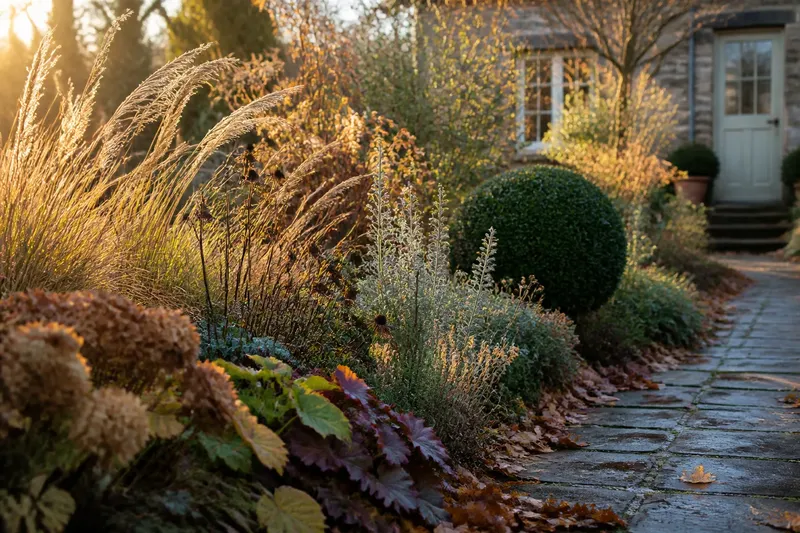
In late autumn, a garden can look vivid without a single open flower: bronze grasses catch the low light, a clipped evergreen holds its shape, and fallen leaves brighten the path. An all-year-flowering garden sounds like the obvious goal, but a border does not need constant blooms to feel cared for or alive. Its character can come from a changing sequence of forms, colors, and pauses.
The useful shift is to plan for year-round interest rather than year-round flowering. That distinction makes room for flowers where they suit the site, while giving foliage and structure a real role in seasons when blooms are scarce. It also frees a gardener from treating every quiet week as a design failure.
What does “all-year flowering” really ask of a garden?
The phrase suggests a steady supply of flowers, as if every part of the garden should be in bloom in every season. In practice, flowering depends on local climate, exposure, soil, and the plants suited to those conditions. A mild winter garden and a frosty one will not share the same flowering calendar, and even a well-planned border may have a stretch with few open flowers.
Flowers are only one visible part of a plant’s life. A perennial may send up fresh leaves in spring, flower in summer, then leave seed heads and stems that hold the border together later. A deciduous shrub can offer blossom, shade, autumn color, and a clear branching outline across the year. Looking at the whole sequence gives a more honest picture than counting bloom months.
This does not mean flowers are unimportant. It means that a garden’s visual interest can change form. A border with a spring flush, a summer peak, and a quieter late season may feel more coherent than one crowded with plants chosen mainly to fill every calendar gap.
What can carry a border when flowers fade?
Foliage often does the most dependable work. Broad leaves, fine blades, silver surfaces, and glossy evergreen foliage each catch light differently. Some plants bring strong leaf color before and after flowering; others make a soft background that lets neighboring flowers stand out during their short display.
Structure matters too. Stems, branches, seed heads, and evergreen shapes give the eye something to follow when petals have dropped. The dry outline of a perennial can be especially striking against frost or a bare bed, while a shrub’s branching shape becomes easier to see after leaf fall. These features are not substitutes for flowers so much as another part of the garden’s seasonal vocabulary.
Small details can make a quiet stretch feel deliberate. A clump of ornamental grass moving in a breeze, the dark stems of a shrub against pale paving, or a bird using a seed head gives the garden something to notice. The point is not to decorate every gap. It is to let a few lasting forms make the pause legible.
How can you plan a rhythm instead of a constant display?
Begin by noticing what the garden already does. Walk through it at different points in the growing year, or use dated photographs if you have them. Record when foliage emerges, when the main flowering waves arrive, which plants keep their shape, and when bare soil or fading stems become most visible. A rough seasonal note is more useful than an elaborate calendar that assumes every year behaves alike.
Then choose a few plants or features to carry each part of the cycle. One might bring early flowers, another a dense summer canopy, and another seed heads or persistent leaves later on. Think in overlapping contributions rather than a relay in which one plant must replace another perfectly. Some overlap makes the transition feel natural.
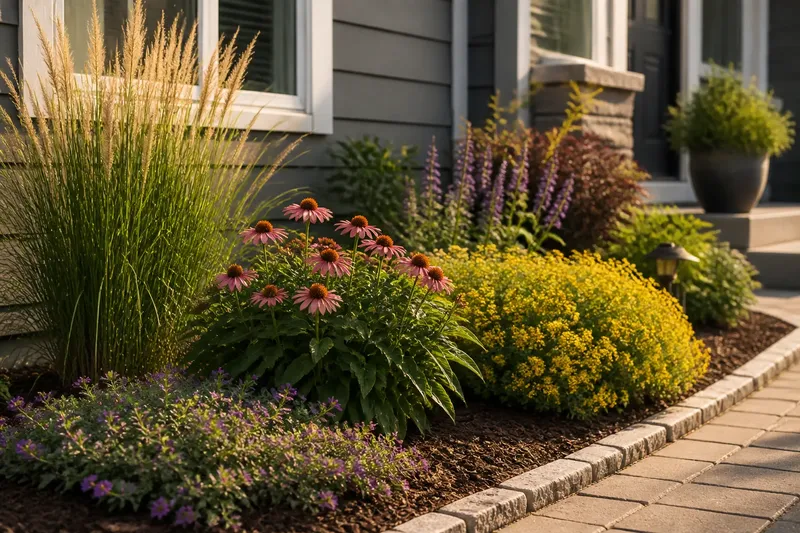
Imagine a narrow border beside a front walk that has a spring bulb display but looks empty by early summer. The gardener could keep the bulbs, add a leafy perennial that covers their fading foliage, and leave a nearby grass standing into winter. The expected result is not continuous bloom; it is a sequence in which the border moves from flowers to fresh foliage to a textured late-season outline.
It helps to consider what will be seen from the house, a path, or a favorite seat. A plant that holds an attractive outline in winter may be more useful near a frequently viewed window than one that blooms briefly at the far edge. Meanwhile, a small, vivid flower can earn its place where a close-up view is easy.
What is worth keeping after the flowers are gone?
Not every fading stem needs to be cut back at once. Some seed heads remain handsome, some offer food or shelter for wildlife, and some simply mark where a plant will return. Others collapse, spread unwanted seed, or look untidy in a particular setting. The decision can be selective: keep the stems that contribute, and remove those that obscure the garden or create a problem.
Deadheading—removing spent flowers—can encourage some plants to produce more blooms, while other plants are better left to set seed or retain their heads. The right choice varies by plant and purpose. If you want to see the seed heads or let birds feed, leaving them is a reasonable design decision; if a plant’s appearance is finished and its stems are obscuring neighboring growth, tidying it may suit the border better. Follow plant labels, manufacturer instructions where relevant, and local rules when a specific care or disposal decision depends on them.
There is no need to keep every winter stem simply to prove that the garden has seasonal interest. A few well-placed forms can carry the view; the rest may be cut back when they become distracting. Gardening is not a contest to preserve the most debris.
Which seasonal details are gardeners often unsure about?
Does a garden need flowers in winter?
No. Winter flowers can be welcome where plants suit the local conditions, but bark, evergreen leaves, grasses, and seed heads can provide interest without them. A quieter view is part of the garden’s seasonal character, not evidence that the design has failed.
Should every plant have a second season of interest?
No single plant needs to do everything. A mix of plants can share the work: one may offer flowers, another foliage, and another a strong winter outline. Judge each plant by the role it plays in the larger border.
When should spent stems be cut back?
Consider appearance, the plant’s growth habit, and whether the stems or seed heads serve a purpose before removing them. If a particular plant’s care needs are unclear, check its label or ask a qualified local horticultural professional.
Can a quiet season still feel intentional?
Yes, if the garden retains a few visible anchors, such as evergreen foliage, clear branch shapes, or standing grasses. Keeping the view uncluttered can make those forms more noticeable than a crowded display would.
What is not worth the effort?
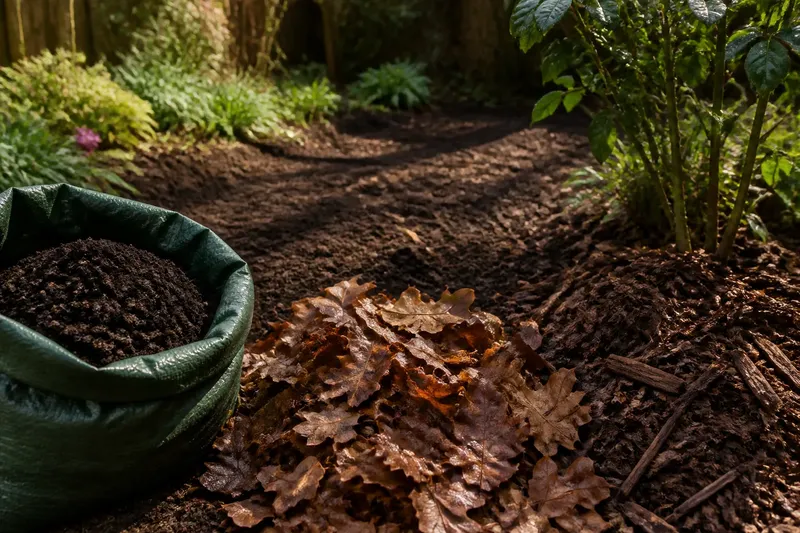
It is usually not worth choosing plants solely to plug every gap in a flowering calendar. A plant forced into the wrong light, moisture, or space may struggle, and a border built around nonstop bloom can become a demanding patchwork. Nor does every bare patch need to be filled: open soil, a resting perennial, or a stretch of visible mulch can give the eye room to pause.
Instead, choose plants for conditions they can handle and for the features they contribute across their own growth cycle. If a local nursery label describes a plant’s mature form, light preference, or seasonal behavior, use that information to compare it with your site. Where the details remain uncertain, a local gardening professional can help identify suitable choices without turning the border into a chase for constant color.
The all-year-flowering garden is a misleading ideal because it treats one moment—open flowers—as the measure of a whole year. A more generous design notices what remains when petals fall: the leaf that catches a slant of light, the stem that holds a winter outline, and the space that lets the next flush of growth feel fresh. Plan for year-round interest, and the garden can keep telling its story even when it is not in bloom.